Terengganu has introduced a new approach to solid-waste management through pyrolysis technology.
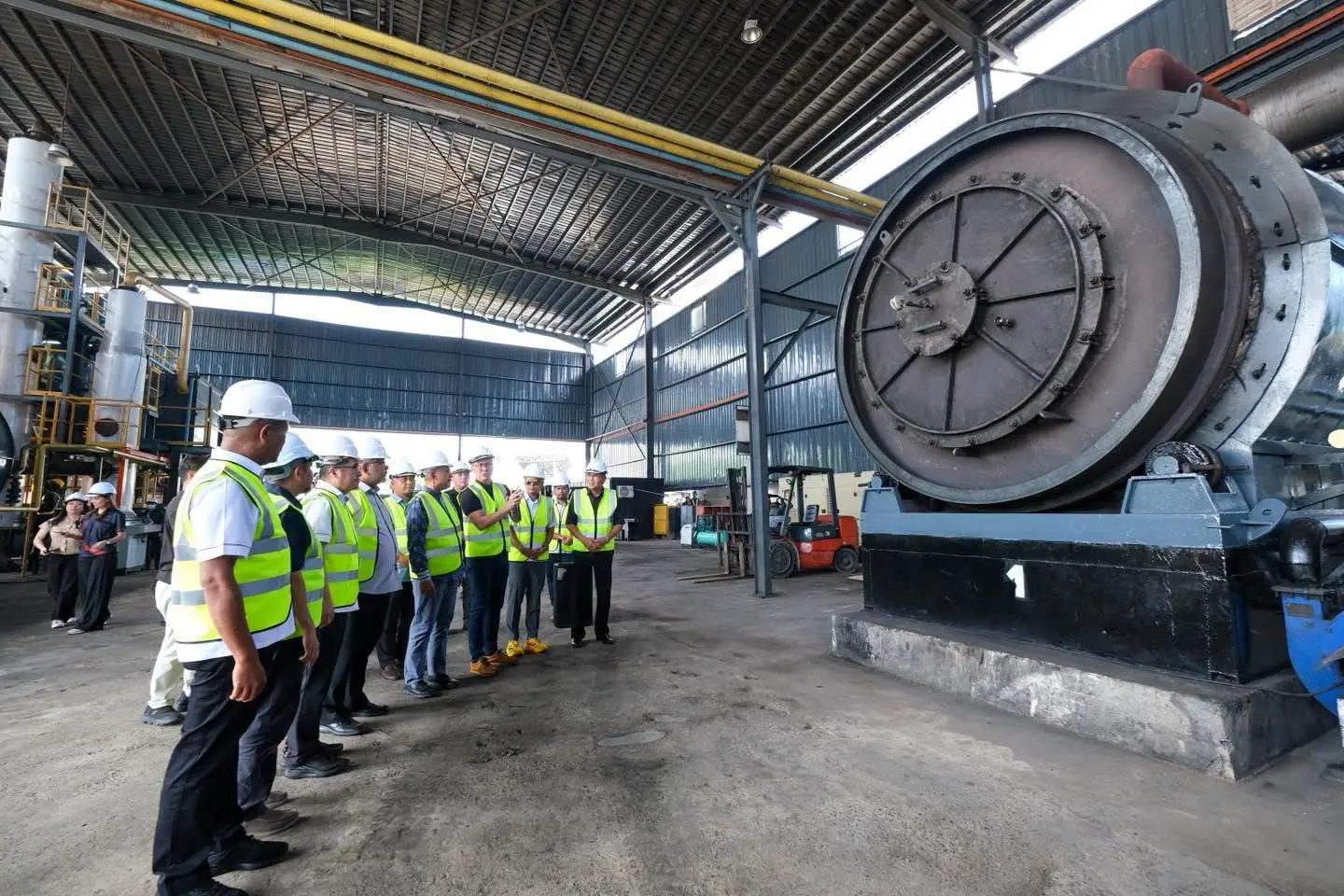
In August 2026, the state launched the RM50 million IGNiS 3R Solid Waste Recovery Plant at Bukit Gelugor, Kerteh, Kemaman. The facility turns solid waste into useful outputs such as biodiesel and carbon.
According to a TRDI report on the project launch, the plant operates 20 reactors and can process up to 8,000 tonnes of solid waste each month. The same report states that the facility could require around 150 workers across technical, non-technical and support roles.
These figures make the project relevant beyond waste disposal.
The bigger question is whether pyrolysis in Terengganu can create lasting economic value. Can it reduce pressure on landfills, produce commercially useful materials and create meaningful jobs for local communities?
Key Takeaways
- Terengganu invested RM50 million in the IGNiS 3R Solid Waste Recovery Plant.
- The facility operates 20 reactors.
- It can process up to 8,000 tonnes of solid waste per month.
- The plant produces outputs including biodiesel and carbon.
- The facility could require around 150 workers across several job categories.
- The technology could help extend the lifespan of landfill sites.
- Its long-term value will depend on operational performance, product demand and local economic benefits.
What Happened in Terengganu?
Terengganu launched the IGNiS 3R Solid Waste Recovery Plant in August 2026 at Bukit Gelugor, Kerteh.
The state spent RM50 million to develop the project.
At the launch, Terengganu Menteri Besar Dato’ Seri Ir. Dr. Ahmad Samsuri Mokhtar highlighted the potential to turn waste into useful resources.
He said local technology had shown that biomass and waste could undergo pyrolysis to produce reusable fuel, including diesel.
Dr Ahmad Samsuri also said the state would identify suitable locations to expand this waste-management approach within Terengganu.
Dato’ Wan Sukairi Wan Abdullah, who oversees local government, housing and health in the state, also provided details on the plant.
He said the facility uses 20 reactors and can process up to 8,000 tonnes of solid waste every month.
The facility also produces biodiesel and carbon. Operators could use the biodiesel as fuel for machinery and vehicles.
The project therefore combines two objectives. It aims to improve waste management while creating new value from materials that people previously treated as waste.
How Does Pyrolysis Work?
Pyrolysis uses heat to break down materials under conditions with little or no oxygen.
This process differs from simply sending waste to a landfill.
A conventional waste system usually follows a linear path. People generate waste, collection services transport it, and authorities dispose of it.
Each stage carries a cost.
Pyrolysis adds another possibility. A facility can process suitable waste and recover useful outputs before final disposal.
In Kerteh, the IGNiS 3R system produces biodiesel and carbon from the waste stream.
This approach supports the broader idea of waste-to-value.
Instead of seeing all waste as a final burden, waste managers can examine whether some materials still contain economic value.
Why Does Pyrolysis in Terengganu Matter?
The importance of pyrolysis in Terengganu goes beyond the technology itself.
The real test is whether the system can work reliably and create value over time.
A plant may have high processing capacity, but capacity alone does not guarantee success.
The facility needs to control operating costs. It also needs reliable machinery, suitable waste inputs and consistent demand for its recovered products.
If businesses can use the biodiesel and carbon, part of the waste stream could gain commercial value.
This idea connects closely with the circular economy.
A circular economy tries to keep resources in productive use for longer. It also aims to reduce the amount of material that ends up as waste.
Malaysia has already made this approach part of its national waste-management direction.
The KPKT Circular Economy Blueprint for Solid Waste in Malaysia 2025–2035 provides a national framework for this transition.
The blueprint focuses on five key areas: governance and legislation, guidelines and procedures, digitalisation and technology, infrastructure and facilities, and market creation.
The Terengganu project therefore fits into a wider shift towards recovery, technology and more efficient use of resources.
From Waste Disposal to Waste-to-Value
Malaysia faces a significant solid-waste challenge.
According to a MIDA publication on Malaysia’s green technology sector, Malaysians generate about 39,078 tonnes of solid waste each day.
That equals roughly 1.17 kilograms per person, based on data from the Solid Waste Management and Public Cleansing Corporation, or SWCorp.
This volume creates pressure on waste collection systems and landfill capacity.
Authorities also need to manage transport costs, environmental risks and the long-term availability of disposal sites.
Waste-to-value technology offers another option.
Instead of sending all suitable material directly to landfill, operators can recover part of the waste stream.
They can then turn some of that material into useful products.
However, waste recovery does not automatically create profit.
The economic outcome depends on the type of waste, plant efficiency, operating costs and product quality.
Market demand also matters.
For this reason, the success of the Kerteh facility will depend on its overall performance rather than its headline processing capacity.
Can Waste-to-Fuel Create Jobs in Terengganu?
Employment provides one of the clearest potential economic benefits.
Dr Ahmad Samsuri said a facility such as the IGNiS 3R plant could require around 150 workers.
These positions cover technical, non-technical and support roles.
That figure gives the employment angle a concrete starting point.
A waste-recovery facility needs people to operate machinery and monitor the plant. It also requires maintenance, logistics and support services.
A larger ecosystem could create additional opportunities in waste collection, transport and material handling.
Businesses may also find opportunities further down the supply chain if demand for recovered products grows.
However, policymakers should look beyond the number of jobs.
Several questions matter:
- How many of the jobs are permanent?
- What skills do workers need?
- Can local workers fill technical positions?
- Can local companies join the supply chain?
- Will the project create new skills within Terengganu?
- How much economic value will stay in the local economy?
These indicators can show whether the project creates a wider economic impact.
Could Pyrolysis Create New Technical Skills?
The project may also increase demand for technical expertise.
Modern waste-recovery facilities need more than conventional waste-handling workers.
They need plant operators, technicians and maintenance teams.
Workers also need knowledge of machinery, process control, safety and environmental requirements.
TRDI reported that the Kerteh facility could require workers from both technical and non-technical fields.
This creates an opportunity for local skills development.
Training institutions and technical education providers could eventually respond to industry demand.
They could develop skills related to waste recovery, green technology and industrial operations.
If the sector grows, Terengganu could build expertise around this type of infrastructure.
However, one facility alone cannot guarantee a new industry.
Long-term demand will determine whether these skills become part of a larger economic ecosystem.
The Commercial Question Matters
Producing biodiesel and carbon represents only one part of the economic model.
Someone still needs to use or buy those products.
TRDI reported that the facility produces biodiesel that can serve as fuel for machinery and vehicles.
The next question concerns commercial demand.
Can the plant produce the fuel at a competitive cost?
Can it maintain consistent quality?
Is there enough demand to support regular production?
The answers will influence the long-term economics of the project.
A commercially viable waste-recovery system needs both technology and a market.
This point also appears in national policy.
Malaysia’s Circular Economy Blueprint identifies market creation as one of its five main pillars.
That focus makes sense.
Recovering a material has limited economic value if no one wants to use it.
A successful circular economy therefore needs industries that can absorb recovered products and return them to productive use.
Can the Project Reduce Pressure on Landfills?
Landfill capacity provides another reason to study the project closely.
TRDI reported that the IGNiS 3R facility could help extend the lifespan of the Bukit Gelugor landfill.
The logic is straightforward.
If the facility processes part of the incoming waste, less material may need final disposal.
That could reduce pressure on available landfill space.
MIDA also highlights waste recovery, treatment and recycling as activities that can take place before final landfill disposal.
Longer landfill lifespan can carry economic value.
Authorities may delay the need for new disposal areas. They may also reduce some long-term waste-management costs.
However, policymakers need to compare these potential savings with plant costs.
They should consider capital investment, operating expenses, maintenance, transport and revenue from recovered products.
Only then can they assess the full economic impact.
The Wider Circular-Economy Context
The Kerteh project does not operate in isolation.
Malaysia has started moving towards a broader circular-economy model for solid waste.
KPKT launched the Circular Economy Blueprint for Solid Waste in Malaysia 2025–2035 to guide this transition.
The blueprint places technology and infrastructure alongside governance and market development.
That combination is important.
Technology alone cannot create a circular economy.
Authorities also need clear rules, suitable infrastructure and demand for recovered materials.
Pyrolysis represents only one possible part of that system.
Other waste streams may suit recycling, composting or other recovery methods.
The question should therefore not be whether pyrolysis can replace every other waste-management method.
Instead, policymakers should ask where the technology works best and whether it delivers measurable value.
The Future Research Analysis
The Future Research identifies three key tests for evaluating the long-term significance of Terengganu’s pyrolysis initiative.
1. Operational Sustainability
First, the facility needs to prove that it can operate reliably.
The plant has a stated capacity of up to 8,000 tonnes per month across 20 reactors.
Future data should show how much waste it actually processes.
Operational performance should also cover downtime, maintenance, safety and environmental compliance.
A successful launch does not guarantee long-term performance.
Consistent operations will provide a stronger measure of success.
2. Commercial Value
Second, the facility needs to show commercial value.
TRDI states that the plant produces biodiesel and carbon.
The next test is market demand.
The project needs reliable users for these products. Revenue also needs to make sense against operating costs.
If the facility can create stable demand, waste may become a productive economic input rather than only a disposal burden.
3. Local Economic Impact
Third, the project should create measurable value for Terengganu.
The initial estimate of around 150 workers provides one indicator.
However, job numbers alone do not tell the full story.
The state should also assess job quality, technical training, local procurement and business participation.
A stronger outcome would create opportunities beyond the plant itself.
Local workers and companies could then participate in a broader waste-recovery ecosystem.
Conclusion
Terengganu’s RM50 million pyrolysis project presents a different approach to solid waste.
The IGNiS 3R facility does not treat waste only as something to bury.
It attempts to recover useful products and create new value.
The plant operates 20 reactors and can process up to 8,000 tonnes of waste each month. It could also require around 150 workers.
These figures give the project significant potential.
However, investment value and processing capacity alone will not define success.
The facility needs to operate reliably. It also needs stable demand for its recovered products.
Most importantly, it needs to create measurable benefits for Terengganu.
If the project reduces landfill pressure, creates sustainable jobs and generates commercial value, it could offer an important waste-to-value model.
It would also show how waste-management infrastructure can support Malaysia’s wider move towards a circular economy.
FAQ
Pyrolysis in Terengganu refers to the technology used at the IGNiS 3R Solid Waste Recovery Plant in Bukit Gelugor, Kerteh. The facility uses thermal processing to recover useful outputs from solid waste. These outputs include biodiesel and carbon.
Terengganu invested RM50 million in the project, according to TRDI’s report on its launch.
The facility uses 20 reactors and can process up to 8,000 tonnes of solid waste per month.
The facility produces biodiesel and carbon. Operators can use the biodiesel as fuel for machinery and vehicles.
Yes. Dr Ahmad Samsuri said a facility of this type could require around 150 workers. The roles include technical, non-technical and support positions.
Pyrolysis can process part of the waste stream before final disposal. TRDI reported that the Kerteh project could help extend the lifespan of the existing landfill.
Yes. Dr Ahmad Samsuri said the state would look for other suitable locations to expand the waste-management approach. Any expansion should still consider local conditions and project feasibility.